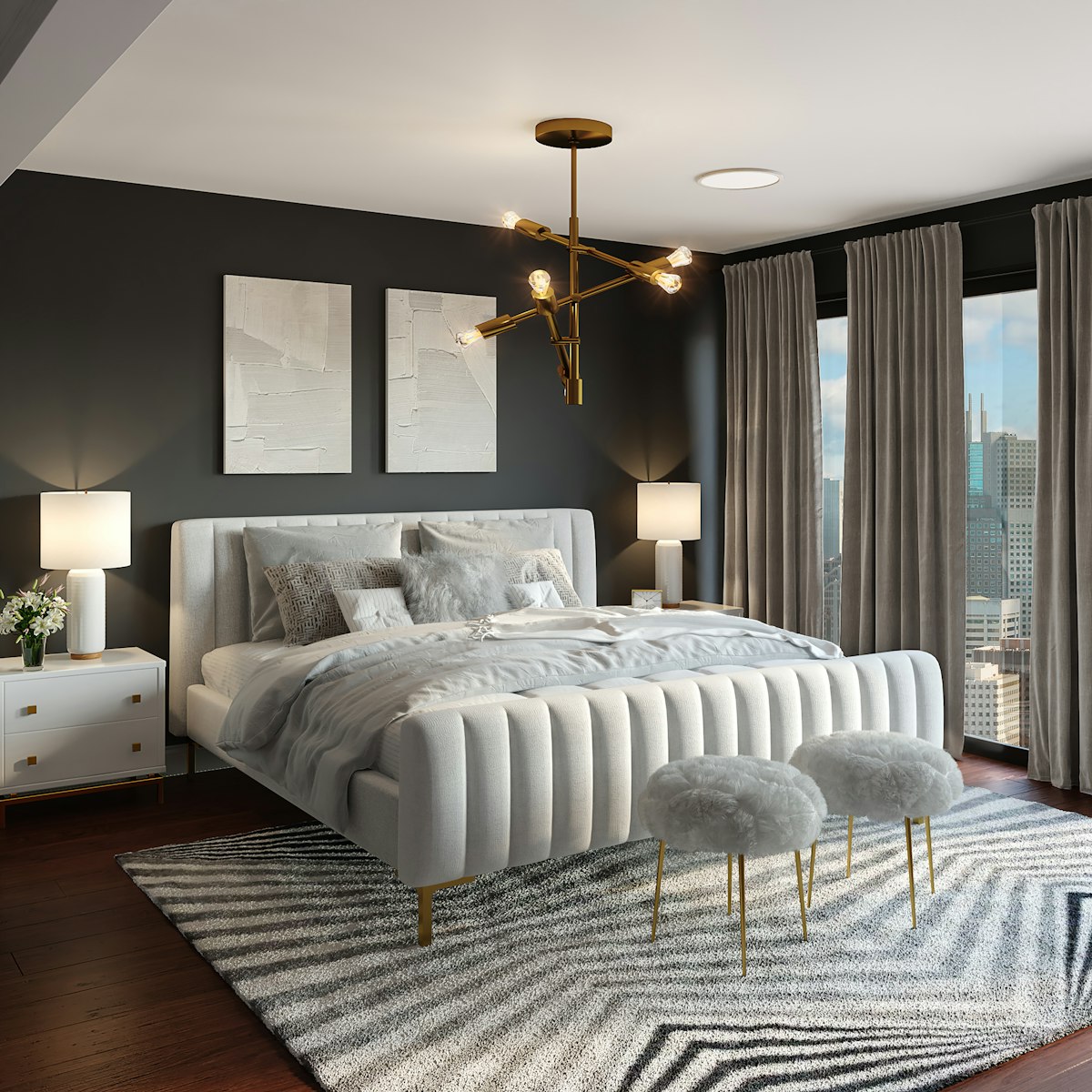
Why this matters
The bedroom is where you spend a third of your life, yet it is typically the last room to receive design attention. A considered refresh — not a renovation — can meaningfully improve sleep quality, morning routine and the emotional texture of your daily life. This guide focuses on changes that deliver the highest visual and functional return for the lowest cost and disruption.
Most bedroom refreshes fail not because of budget, but because of sequence. People buy a new duvet cover and call it done, or repaint a wall without thinking about how the new colour interacts with the existing furniture and light. The result is a room that looks half-considered — one element updated while everything else stays frozen in a previous era of taste. A proper bedroom edit treats the room as a system: textiles, lighting, surfaces and negative space all working together.
What follows is a room-by-room refresh methodology we use at Home Brief when assessing bedrooms for our house tours and reviews. It is practical, sequential and designed to work whether your budget is three hundred pounds or three thousand.
Start with the problem, not the Pinterest board
Before you open a single browser tab, stand in your bedroom at three different times of day: morning light, afternoon and evening. Write down what bothers you. Not what you want it to look like — what is actually wrong. Is the light harsh in the morning? Does the bed look flat and uninviting? Is there visual clutter on the bedside table? Does the room feel cold, both literally and emotionally?
Common problems
- Room feels cold or clinical despite neutral palette
- Bedding looks flat and hotel-generic
- Overhead light is the only source after dark
- Bedside tables are cluttered and mismatched
- Walls feel bare but you are unsure what to hang
- Carpet or flooring is dated but cannot be replaced
Solutions in this guide
- Textile layering with varied textures and weights
- Three-layer bedding system for depth and warmth
- Three-point lighting plan with task and ambient layers
- Bedside styling with the one-in-one-out rule
- Art and mirror placement that anchors the room
- Rug layering to disguise and warm tired floors
Diagnosing the specific problem prevents the most common mistake: buying things that look good in isolation but do nothing to fix the actual issue. A beautiful throw means nothing on a bed that already has too many elements. A new lamp is wasted if the bulb temperature is wrong.
Textiles first: the three-layer bedding system
Bedding is the largest visual surface in any bedroom, and it is the single change with the most impact. The three-layer system creates depth without bulk: a fitted sheet and flat sheet in a base tone, a duvet cover in a complementary or tonal shade, and a top layer — a throw, quilt or coverlet — that adds texture contrast.
The mistake most people make is matching everything. A bedroom where every textile is the same colour and weave reads as flat and commercial. Instead, aim for tonal harmony with texture contrast. Pair a crisp cotton percale sheet with a washed linen duvet cover and a chunky waffle-knit throw. The colours stay within the same family — warm whites, oat, stone — but the surfaces catch light differently and create visual interest.
What to look for
Sheets: 200–300 thread count percale or sateen in white or warm ivory. Avoid anything above 600TC — it is marketing, not quality. Duvet cover: Washed linen in oat, putty or warm grey. Pre-washed is essential — unwashed linen pills. Top layer: A waffle cotton throw or lightweight quilted coverlet in a contrasting texture.
Our bedding picks
Best sheets
Soak & Sleep Egyptian Cotton Percale
400TC percale, crisp but softens beautifully. Available in warm white and oat. Exceptional value.
From £39 (double set) — soakandsleep.com
Best duvet cover
The White Company Linen Duvet Cover
Pre-washed 100% linen in natural, putty or dove grey. One of the few UK linen covers that holds its shape after washing.
From £95 (double) — thewhitecompany.com
Best throw
Piglet in Bed Waffle Cotton Throw
Heavyweight waffle-weave in oat, cinnamon or sage. Looks exactly right on a made bed and survives regular washing.
£79 — pigletinbed.com
Pillows deserve more attention than they typically receive. Two sleeping pillows per person, stacked or standing against the headboard, plus one decorative cushion per side is the maximum. Any more and the bed becomes a project to unmake every night, which means it never looks made during the day.
The Home Edit
Trend intelligence and buying guides, twice a week. Free.
Lighting: the three-point plan
The overhead pendant or flush mount that came with the room is almost certainly wrong. It produces flat, shadowless light that makes everything look worse — skin, textiles, paint colour. The solution is not to remove it, but to supplement it with two additional light sources that create layers.
Point one: ambient. A pendant or ceiling fixture with a warm-white LED bulb (2700K) on a dimmer. If you cannot install a dimmer, use a smart bulb. This is your evening light — low enough to unwind by, warm enough to make the room feel lived in.
Point two: task. Bedside lamps or wall-mounted reading lights. These should produce focused, directional light for reading without illuminating the entire room. Adjustable arm sconces are the gold standard because they free up bedside table space.
Point three: accent. A table lamp on a dresser, a floor lamp in a corner, or LED strip lighting behind a headboard. This is the light that makes the room feel considered rather than functional. It creates depth by illuminating a secondary zone that the eye registers subconsciously.
Lighting quick wins
Replace every bedroom bulb with 2700K warm white. This single change costs under ten pounds and transforms the room's atmosphere after dark. Avoid daylight bulbs (5000K+) in bedrooms — they suppress melatonin and make painted walls look clinical.
Our lighting picks
Best bedside lamp
Pooky Pebble Table Lamp
Tactile ceramic base, linen shade. Warm and understated — exactly right for a bedside. Arrives with a warm bulb.
From £145 — pooky.com
Best wall sconce
Anglepoise Type 75 Wall Light
Adjustable arm, focused reading light. Frees the entire bedside table — worth the installation effort.
£230 — anglepoise.com
Accent / dresser lamp
Cox & Cox Ribbed Glass Table Lamp
Small-footprint ribbed glass with soft shade. Perfect for a dresser or shelf — adds the third light point without dominating.
£79 — coxandcox.co.uk
Bedside styling: the discipline of restraint
The bedside table is the most abused surface in the home. It accumulates medication bottles, phone chargers, old water glasses, half-read books and whatever arrived there last. The rule is simple: one lamp, one book (or Kindle), one small vessel (for water, a candle or a plant) and nothing else visible. The charger goes in the drawer or clips to the back of the table. The medication goes in a tray inside the drawer.
If your current bedside tables are too small, too tall or simply wrong, replacing them is one of the highest-return upgrades. The ideal height places the table surface level with the top of the mattress, plus or minus five centimetres. Too high and it looms; too low and it disappears.
Walls and art: anchoring the room
Bare walls make a bedroom feel temporary. But the solution is not to cover every surface — it is to create one strong focal point, usually behind or above the bed. A single large piece of art, a pair of framed prints hung symmetrically, or a textile wall hanging all work. The piece should be at least two-thirds the width of the headboard to feel proportional.
If art feels like too much commitment, a large round mirror on the wall opposite the window does double duty: it bounces natural light deeper into the room and creates a visual anchor without requiring you to choose a subject. Lean it against the wall on a dresser for a less formal approach.
Bedside table picks
Best bedside table
Heal's Brunel Bedside Table
Solid oak, single drawer, correct proportions for a standard bed frame. Understated and extremely well made.
£425 — heals.com
Mid-range pick
MADE Dalston Bedside Table
Walnut veneer with a clean, graphic silhouette. One of the few budget options that looks genuinely considered.
£229 — made.com
Characterful alternative
Barker & Stonehouse Mango Wood Bedside
Solid mango wood with natural grain variation — no two pieces identical. Adds warmth and material interest.
£195 — barkerandstonehouse.co.uk
The floor: disguise and warm
Carpet you cannot replace? Layer a rug on top. Hard floors that feel cold in winter? A rug is not optional — it is essential. The bedroom rug should extend at least 60 centimetres beyond each side of the bed so your feet land on something soft every morning. A jute or sisal base layer with a wool or cotton rug on top creates the warmth and texture that makes a bedroom feel finished rather than furnished.
Bedroom rug picks
Best overall
Wool and the Gang Berber Rug
Hand-tufted Berber wool in natural cream with minimal geometric detailing. Thick, warm and ageless.
From £345 (160×230cm) — woolandthegang.com
Natural base layer
Nkuku Woven Jute Rug
Dense flat-weave jute in natural. Use under a wool rug to add warmth to hard floors at minimal cost.
From £119 (150×210cm) — nkuku.com
Budget pick
Dunelm Cosy Chunky Knit Rug
A thick cotton-blend rug that softens hard floors at an entry price. Gets better with washing. Ideal for rentals.
From £49 (120×170cm) — dunelm.com
A bedroom should feel like it was composed, not assembled. The difference is restraint: fewer elements, better quality, intentional placement.
The refresh checklist
Use this as a sequential guide. Each step builds on the previous one — resist the urge to skip ahead.
- Audit the room at three times of day — note what bothers you, not what you want
- Clear every surface completely, then add back only what earns its place
- Replace bedding using the three-layer system: base sheet, duvet cover, textured top layer
- Limit pillows to two sleeping plus one decorative per side (maximum)
- Install or upgrade bedside lighting — wall sconces or table lamps with warm bulbs
- Add a third light source: accent lamp on dresser, floor lamp in corner, or LED strip
- Replace all bulbs with 2700K warm white
- Style bedside tables: one lamp, one book, one vessel, nothing else visible
- Hang one strong piece of art or a mirror above or behind the bed
- Add a rug that extends at least 60cm beyond each side of the bed
- Introduce one natural element: a plant, dried stems or a small branch arrangement
- Remove anything that does not belong in a sleeping space — exercise equipment, work materials, laundry
The verdict
A bedroom refresh is not about spending — it is about sequencing. Textiles first, lighting second, surfaces third. Each layer builds on the last. The most common mistake is treating these as independent decisions rather than a coordinated system. Follow the checklist above in order, resist the urge to buy decorative items before the fundamentals are right, and you will have a bedroom that looks and feels like it was designed by someone who understands how rooms actually work.
Home Brief editorial is independent. We may include affiliate links; these are always disclosed and do not influence our recommendations. Full disclosure.